
Why People Panic Every Time a New Creative Tool Appears
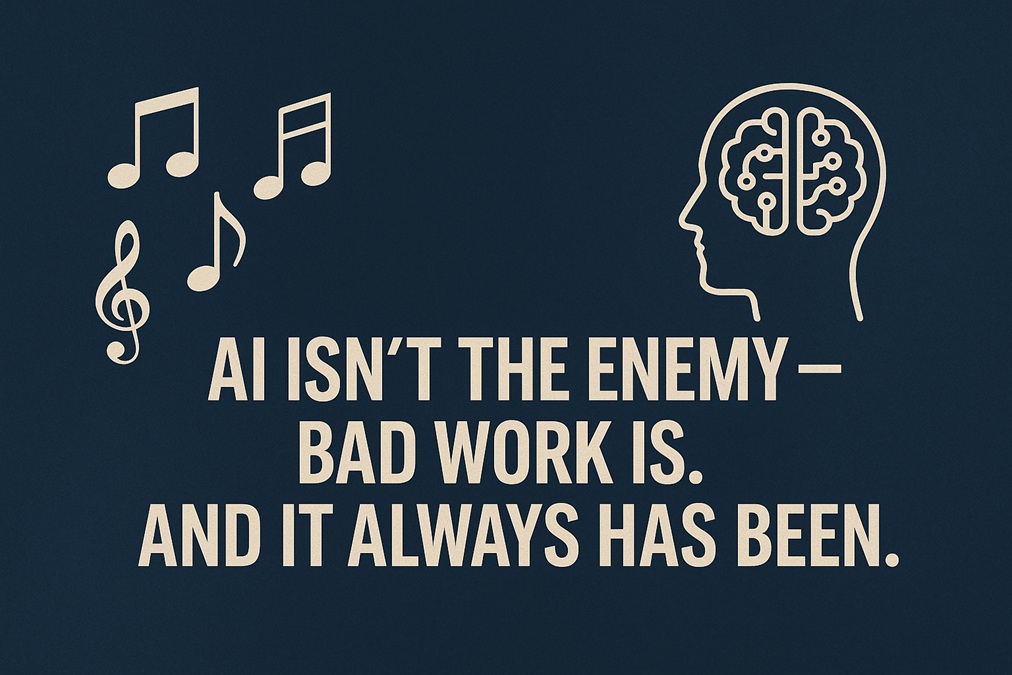
Whenever a new technology enters the creative world, the reflex reaction is fear. It happened with printing presses, cameras, synthesizers, Photoshop, YouTube, TikTok — and now AI. But underneath all the panic is a simple truth: most creations, whether made by humans, AI, or a mix of both, won’t rise. Only the good ones do. This has always been how creativity works.
Books: The Best Example of How Creation Has Already Been Democratized
Today, anyone can write and publish a book. Over 1.7 million self-published books come out each year, yet most sell fewer than one hundred copies. Only a small percentage of writers ever break even. The availability of tools didn’t guarantee success back then, and it doesn’t now. Success still depends on good writing, strong marketing, persistence, and a bit of luck. People didn’t call self-published books “fake literature.” They adapted. The market filtered itself. Weak books faded. Strong ones rose. The exact same pattern is happening with AI music.
AI Music Isn’t Replacing Musicians — It’s Replacing Excuses
AI doesn’t threaten real musicians. It threatens the old idea that only a select few could create. A tool doesn’t turn someone into a great artist any more than Microsoft Word turns someone into a bestselling author. AI can generate sounds, melodies, or voices — but it can’t give you taste, emotion, storytelling, identity, or persistence. To stand out, you still need to connect with people, build your message, and show up consistently. The work hasn’t changed; the tools simply became more accessible.
The Market Was Already Flooded Long Before AI
People say “AI music will flood the industry,” but we were already drowning in content. Spotify gets more than 120,000 new songs uploaded every day. YouTube gets 500 hours of video every minute. TikTok pours millions of new music-based clips into its feed daily. AI didn’t create chaos — it just lowered the entry point. The real fear behind the complaints isn’t about the technology. It’s about competition. The advantage certain people used to have is gone.
The Collapse of the Old Gatekeepers Is What Really Scares People
For decades, record labels and industry executives decided who even had a chance. Studio access was expensive. Distribution was locked down. Marketing required serious money. Now: anyone can produce, anyone can publish, anyone can promote, and anyone can reach an audience. The power shifted. And whenever power shifts, those who used to have it are loudest in their fear. But if you truly love music, this moment should feel exciting, not dangerous.
We’ve Seen This Pattern Repeated Throughout History
Photography didn’t kill painting. Painters evolved. Synthesizers didn’t ruin music. They expanded it. Auto-Tune didn’t destroy vocals. It created new styles. YouTube didn’t collapse the industry. It launched more independent musicians than any label ever did. Every new tool that democratizes creativity is met with fear at first. Then it becomes normal. Then it becomes essential.
The New Gatekeepers Are Algorithms, Not Record Labels
Even though the old industry gatekeepers lost their control, the modern world still has powerful gatekeepers: Spotify, Apple Music, YouTube, TikTok, Instagram, Meta, Amazon. One algorithm tweak can boost your career or bury it. One policy change can reshape the landscape overnight. These companies don’t stop you from creating — they simply determine how far your work travels. The game is more open than ever, but it isn’t entirely free.
AI Should Inspire You, Not Scare You
The rise of AI should make creators feel liberated. No more waiting for approval. No more begging for studio time. No more needing connections. These tools open the door for anyone with vision and heart. A great song is a great song, whether it’s made with a guitar, a laptop, an orchestra, or an algorithm. Audiences don’t care about the tool. They care about emotion, authenticity, and connection. Only the good creations rise. That has always been true.
Final Thought: Don’t Fear AI — Fear Not Creating
The only real enemy in this new creative era isn’t AI — it’s hesitation. Fear of change. Fear of competition. Fear of being left behind while somebody else uses the tools bravely. This isn’t AI versus humans. It’s creators versus noise. And at the end of the day, quality always wins.